Showing posts with label paleontology. Show all posts

Friday, November 5, 2021

Conservation Painting 2021

 Hey All! Is anyone still reading this? I thought I'd go ahead and update with some work I did this year.

First up, more painting in support of conservation initiatives! In previous years I've done a number of paintings for various conservation related charity auctions. With last year being (hopefully) peak pandemic, all the usual events I do artwork for were either cancelled, or had their format tweaked to a virtual environment.

World Giraffe Day 2021

It was nice this year when my first post-vaccinated gathering was the annual 'Laughs for Giraffes' event in celebration/support of World Giraffe Day in June - this year hosted by the Global Conservation Force. I was asked if I would be willing to create something, which I happily agreed to, and came up with this:


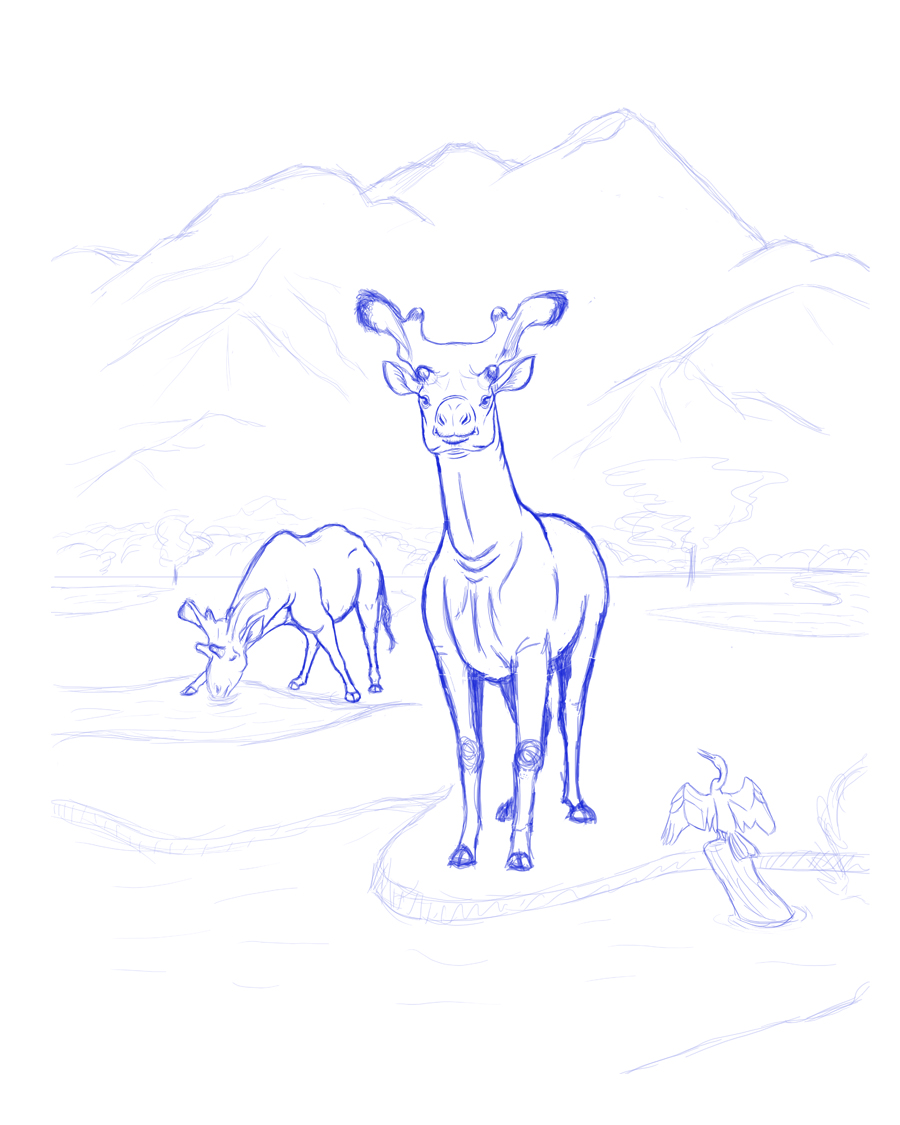
 What was fun about this one was how serendipitously it came about. I was actually planning something completely different but while experimenting with different compositions and doing a bunch of sketching of Giraffes, I ended up jotting down this pose which really resonated with me, so I designed the image around it:


And here's the final framed print that sold at the silent auction:


World Rhino Day 2021

While the annual Bowling for Rhinos event didn't happen this year, I decided to do a drawing to post across all my social media platforms to raise awareness for World Rhino Day on Sep 22, 2021:


No that's not just a poorly drawn rhino, these are the actual proportions of the stout extinct American rhino, Teleoceras, made famous by the Ashfall Fossil Beds in Nebraska. As content as this animal looks, it has no idea an eruption from the Yellowstone volcano ~700 miles away is soon going to 'Pompei' its entire herd. While these guys were wiped out before humanity even existed, humans are directly causing the rapid decline of all 5 rhino species still alive today. 

And that's what I have for this year. I've been thinking a lot lately about how to take these sorts of projects further, and put my skills to good use to do more science communication on a variety of important topics. While animals like rhinos and giraffes certainly need our help there are a lot of more obscure animals, and indeed entire interconnected ecosystems that deserve awareness and better PR campaigns as well. After all, a wild rhino population isn't going to survive if the rest of its ecosystem isn't in tact....

That's all for now. I hope to have more on this topic soon.

-Evan 

Thursday, October 31, 2019

Jack-O-Lanterns: IRL 2019

Happy Halloween Everyone! That means it's time for a "Jack-O-Lanterns In Real Life" post! This year I only got one, and it was from Nikki Elder.

It's a design from last year's batch, and she chose the Allosaurus skull. I think it turned out great!


And here's the original for your convenience:


Thanks for playing, Nikki, and Happy Halloween everyone!!! Looking forward to what everyone comes up with next year!

For Previous Jack-O-Lanterns IRL, see:
2012
2013
2015
2017 - (I forgot to post them that year but they are at the bottom of the 2018 design post)

-Evan

Friday, June 21, 2019

A Sivatherium for World Giraffe Day 2019

Today is World Giraffe Day - an initiative set up by the Giraffe Conservation Foundation (GCF) to celebrate giraffes and raise awareness for their conservation on the LONGEST day of the year (get it?). Yes, you may not be aware, but giraffe populations across Africa are on the decline. The total population has dropped almost 40% since the 1980s. While the conservation of other iconic animals like elephants and rhinos has gained a lot of attention over the years, the giraffe decline isn't as well known to the public, and even came as a bit of a surprise to science community. But it's true. Giraffes face issues related to habitat destruction and fragmentation, poaching, and human conflicts in various areas of the continent.

So for World Giraffe Day 2019, I have something special for you. You may recall for the past few years I've been creating digital paintings in Adobe Photoshop to benefit animal conservation, including giraffes. The awesome people from the Los Angeles Zoo have been running an annual event for the last four years specifically dedicated to giraffes, called 'Laughs for Giraffes.' It is a live comedy show/fundraiser, which benefits the GCF mentioned above. To help with this effort, I've created a few paintings for this event. The first year I painted a giraffe, and the next year I painted the only other member of the giraffe family, the okapi. For this year, I realized I was out of  living giraffids. Sure I could just paint more giraffes or okapis, but instead I took this opportunity to delve into my paleoart roots.

While the only living members of the giraffe family are giraffes and okapis, you may be surprised to learn that in prehistoric times, the group was quite diverse. Not only that, but many of them looked very different from what you might think of as a giraffe. Modern giraffes are quite exceptional and extreme animals, even by prehistoric standards. Most of the extinct giraffids did not have exceptionally long necks, for instance. The species I decided to focus on for my giraffe conservation painting this year, was Sivatherium giganteum:

Sivatherium giganteum by Evan Boucher
Click to Enlarge


I would like to take the rest of this post to discuss some of my research process and how I came to some of my decisions and interpretations in this piece. I think the painting is far more interesting if you understand what's going on in it, and hopefully this blog post can be a nice companion text to the painting for those who are curious to learn more about this bizarre animal. Just a warning, it's a long post, so I hope you're ready to learn about all the prehistoric Himalayas! For the TL;DR version, don't leave! Just skip to the 'Results' section below.

Restoring Sivatherium giganteum


At 2.2m (7.4ft) at the shoulder (3m or 10ft in total height), with thick forelimbs, and an estimated mass of around 1246 kg (2746.96 lbs), Sivatherium is thought to be the heaviest ruminant ever discovered. One thing that drew me to it as a subject is the fact that it had a shorter broader snout from the living giraffids, and very extravagantly shaped ossicones (horn like projections of bone that remain covered in skin and fur - unique to the giraffe family), that are quite different from what you see in giraffes and okapis - superficially looking somewhat similar to a moose's antlers.

I set out to paint this bizarre animal in its ancient habitat, and wanted to do it justice, so I put in the time for perusing the scientific literature to learn as much as I could about the anatomy, ecology, and geologic context of the animal. While the process was certainly involved, I thoroughly enjoyed it, considering it's been quite some time since I've went all in on a paleoart restoration. It was also a fun challenge in that typically my paleoart interests tend to focus on various Mesozoic archosaurs, and I'm not usually as familiar with the nitty-gritty details of extinct mammals. 


With all good paleoart, it's best to start with the fossils.  For my reconstruction, I based my proportions on photographs of the original fossils, as well as the original drawings and description by Falconer and Cautley in 1836. The technical description and skillfully drawn figures were incredibly helpful. But in addition to this, London's Natural History Museum even digitized the holotype specimen described in the paper, and uploaded the 3D model to interact with online! You can even play with it here:


 This was a really great reference to help understand the form of the skull in three dimensions. It isn't a complete replacement for the original paper and figures, however, as using all three resources provided valuable insight that couldn't be deciphered from only one source. Being able to see this thing from different lenses, and read the insights of the original description was all invaluable. Since the original description focused mostly on the skull, the body proportions were based on the Basu et. al. reconstruction and mass estimate from 2016. This provided the insight into the the thicker proportions of the front legs, and helped to plan out general body proportions. 

Reconstruction from Basu et al. 2016 (anterior view)


Reconstruction from Basu et al. 2016 (left lateral view)

Many older restorations of this animal have been depicted as very moose-like, no doubt because of the larger snout and extensive headgear. I didn't want to assume this to be true for my restoration, however, as moose have very specific anatomy in their snouts to give them their characteristic bulbous nose. Their skull's nasal opening is also much more receded and enlarged than what is seen in the Sivatherium skull. I read up a little on modern mammals with particularly bulbous snouts, like moose, and the saiga antelope, and determined a stout, but not particularly bulbous nose was the most logical way to go for Sivatherium. The skull nasal opening just didn't seem to fit what we find on animals like moose, saiga, or any sort of trunked animal. 

A classic moose-like Sivatherium. Image in the Public Domain

Since giraffes are particularly strange, even among their own family, I didn't want to give my Sivathere an overtly giraffe-like pelt. After all, okapis have a completely different pattern on their hides than the famous spots of giraffes, despite being each other's closest living relatives. I ultimately decided to give my subject a somewhat okapi-reminiscent look, but wanted it to feel like its own animal. After all, it's not uncommon for even closely related animals to have completely different color patterns based more on habitat and ecology than what is related to them. While some of the colors on my subject match those found on the okapi, I wanted to make the shapes of the leg stripes and patterns on the head unique to this animal. The torso of my Sivathere is somewhat loosely based on the eland, which is a very large living antelope (which are also ruminants). I chose the eland because Sivatherium was a very large animal, and I decided to depict it living in a similar type of environment as the eland. I considered perhaps using the nilgai as a reference, since they currently live in the geographic area that this Sivatherium was found in, but decided to go with the heavier eland, since the environment of the Himalayan foothills has changed quite a bit in the last 2.5 million years. 

The ossicones on the head were fun to restore, since, unlike horns, they are covered in skin and fur. I made the ones projecting above the eyes very giraffe-like (including the worn-down hair on the tips from intraspecific fighting common in older bulls). For the large-flat ossicones on the back of the head, I gave it a short velvety fur (I've had the pleasure of petting an okapi once, and this was somewhat based on the amazing feel and sheen of their coats), with some longer hair tufts near some of the fringes. These tufts are speculative, but my idea was that they could help emphasize the size and shapes of the ossicones when advertising status to females. 

My idea was that the individual in the foreground is an older more experienced male, with a younger male behind him - the start of what are known as bachelor herds in the social structures of many types of animals, including giraffes.

As far as postures go, I had played with a couple ideas. I always wanted the one in the foreground to look somewhat alert, similar to poses I've seen by giraffes surveying their landscape. For the one in the background, I originally wanted to have it foraging. I went down a research spiral trying to figure out if Sivatherium was a browser or grazer (Most of the sources I found suggested it was more of a grazer, but I found differing opinions and interpretations in different sources). Partly since I couldn't find a definitive answer to this question, I ultimately decided to instead depict the animal taking a drink. 

One main reason for this was to help hammer home the giraffe relationship. Since this painting was done for a charity auction, I wanted it to be as educational as it possibly could be from just the visuals, since I wouldn't be around to explain the whole thing. The rendering of the animals looked somewhat okapi-like - which was a good start, but I thought it best to hammer home the giraffe family connection by depicting one of the animals in the iconic giraffe drinking posture. Not only does this help sell the familial relationship, but it's also probably how the animal actually behaved. This awkward legs-splayed posture is also found in the okapi (which is even closer related to the Sivatherium than the giraffe is), which implies that this drinking posture evolved in the family before the comically long neck of giraffes did. 

One part of this project I found enjoyable was building a simple 3D model in Maya and taking an hour or so to throw in a really rough rig to help me experiment with volumes and poses, and to help me understand this bizarre animal in perspective. For the reconstruction I converted the figures from the above-mentioned skeletal reconstruction (Basu et. al 2016) to image planes in Maya to help with proportions when making my rough volumetric model:


The Paleoecology of Sivatherium giganteum


With my subject animal picked, early on I decided to take this further than my previous paintings, and attempt to restore the full environment. This required more extensive research, and helped inform some of the decisions made for the restoration of the animal itself, as all animals are a product of their environments. 

Sivatherium giganteum (meaning 'Shiva's Beast') comes from the late Pliocene to early Pleistocene boundary of the Sivalik Hills of the Himalayas in what is now India and Pakistan. The genus lived from around 5 million years ago to around 8,000 years ago (which would have had it overlap with modern humans - and we even have ancient rock art that might be depicting it!). The specific locality I restored in the painting is at around 2.5-2.6 million years ago, from the late Pliocene Pinjor Formation. 

preliminary planning sketch

The Sivalik Hills at the time was a warm, humid environment, with seasonal rainfall, including summer monsoons, and wildfires during the dry winter periods. It appears as if there were grasslands with freshwater ponding conditions, adjacent to upland montane regions (indicated by pollen of more temperate flora). Sivatherium shared this environment with other animals like ancient species of elephants, hippos, rhinos, as well as hyenas, mongooses, rodents, lizards, and more. Around the time period depicted there may have been a faunal turnover event from an even wetter environment, where there might have been a large freshwater lake opposed to smaller ponds (as indicated by slightly older fossils of darters, pelicans, crabs, crocodylians, etc). The environment was slowly trending toward cooler and drier, especially later, as the Pliocene gave way to the Pleistocene around 1.8 million years ago, when increased tectonic activity occurred in the region. This changing climate, along with the barrier-free migration of fauna from Europe and Africa into the Indian subcontinent had a part in the extinction of some of this unique Sivalik fauna. 

environment color work in progress

To depict this environment, I decided to render a lowland grassland, adjacent to the mountains to the north. The idea of a seasonal monsoon was appealing to me, as it felt like a unique idea to depict a grassland that was recently flooded by the storms, creating well established ponds. I kept a mixed savanna transition to woodlands in the background, as the environment was still in transition to extended grasslands. Everything is bright green thanks to the recent storms, and the freshwater ponds have green algae from the family Zygnemataceae growing in them (zygospores of this algae have been found in deposits, suggesting stagnate freshwater).

I depicted a darter in the foreground and a few pelicans taking refuge in one of the temporary ponds in the background. These are based on fossils found from the area. The pelican and darter bones that were found weren't complete enough to confidently assign to any current or known extinct species, though. I therefore left the pelicans somewhat ambiguous as to their affiliation, and rendered the darter in the plumage of the modern Oriental Darter (Anhinga melanogaster), mostly to help indicate the Indian setting. I also found it enjoyable to show now extinct animals coexisting with modern species, which is something that happened regularly throughout the world, but we don't always think about. I particularly liked the idea of adding birds that depend on large bodies of water to these seasonal flooded grasslands. Animals will take advantage of available resources, even if they are temporary, seasonal phenomena. It made me think of my time living in the Bay Area of California, where I would see American white pelicans hanging out in the salt ponds along the bay only during certain times of the year. 

blocking in color before adding lighting and removing line work

One final detail I would like to point out, is in trying to restore a full ecosystem, I added a fun little flourish I don't usually see in paleoart. If you look under the drinking Sivatherium, you will see its droppings. One thing that I instantly noticed when I went to South Africa four years ago was how easy it was to tell there were lots of big animals living in the area by the various and plentiful droppings you would see - even if the animals weren't present. I felt it necessary to include this crucial part of the ecosystem into the painting.

Results


So with all of that, we have a painting of a pair of Sivatherium who emerge out of the woodland onto a flooded grassland after a summer monsoon, to take advantage of the newly deposited freshwater ponds for a drink.

I added a built-in white matting around the composition to evoke the feeling of a classic Victorian naturalist plate, often paired with scientific texts on 'exotic' animals in the 19th century. 

Since this is a more obscure subject for many viewers, and all of this information might not be immediately apparent to someone bidding on the painting at a conservation fundraiser, I got a custom engraved plate to add to the picture frame, so that the future owner can have some context:

Sivatherium label giving just the broad strokes

My training as a museum docent has taught me that interpreting natural history isn't all about regurgitating facts or teaching someone everything about a subject, but rather giving them just enough to steer them in the right direction to discover more. So in this case, the painting is the way to pique their interest, and the engraved plate gives them the tools to learn more, if they so choose.

The final framed print at a gallery event, where I had the pleasure to discuss my work with viewers.

I would also like to note that depicting an extinct giraffe relative isn't only to satisfy my own interest in prehistory. I hope it also helps people to think about the plight of the modern giraffids. With giraffes on the decline, and their okapi cousins endangered, it's quite possible that sometime in the future there won't be any members of this unique family on the planet anymore. I hope by showing what used to be here, I can help people understand what amazing creatures are at risk, so that we can do something about it. Hopefully it can inspire someone to think "I wish I could see one of these crazy things living today. Maybe I should support efforts to save their cousins so they don't have the same fate."

So please, help support the giraffes on this World Giraffe Day! Either by supporting the GCF directly, or, for those of you in Los Angeles, consider registering for the upcoming Laughs for Giraffes event, where you can have a great time watching stand-up comedy, and maybe even be the one to take home a framed copy of this piece of original paleoart. 

References

  • B. Clifford, Andrew & M. Witmer, Lawrence. (2006). Case studies in novel narial anatomy: 2. The enigmatic nose of moose (Artiodactyla: Cervidae: Alces alces). Journal of Zoology. 262. 339 - 360. 10.1017/S0952836903004692. 
  • Basu C, Falkingham PL, Hutchinson JR. 2016 The extinct, giant giraffid Sivatherium giganteum: skeletal reconstruction and body mass estimation. Biol. Lett. 12: 20150940. http://dx.doi.org/10.1098/rsbl.2015.0940
  • Clifford, A., & Witmer, L. (2004). Case studies in novel narial anatomy: 3. Structure and function of the nasal cavity of saiga (Artiodactyla: Bovidae: Saiga tatarica). Journal of Zoology, 264(3), 217-230. doi:10.1017/S0952836904005540
  • Dennell, Robin. (2008). The taphonomic record of Upper Siwalik (Pinjor stage) landscapes in the Pabbi Hills, northern Pakistan, with consideration regarding the preservation of hominin remains. Quaternary International. 192. 62-77. 10.1016/j.quaint.2007.06.024. 
  • Estes, R. D. (1991). Behaviour guide to African mammals. Berkeley etc.: California University Press.
  • Falconer H, Cautley PT. 1836 Sivatherium giganteum, a new fossil ruminant genus. Asiatic Res. 19, 1 – 25.
  • Franz-Odendaal, Tamara & Solounias, Nikos. (2004). Comparative dietary evaluations of an extinct giraffid (Sivatherium hendeyi) (Mammalia, Giraffidae, Sivatheriinae) from Langebaanweg, South Africa (early Pliocene). Geodiversitas. 26. 
  • Khan, Aleem & Akhtar, Muhammad & Sarwar, Muhammad & Saeed, Muhammad. (1991). Vertical distribution of Siwalik Giraffids. Acta Scientia. 1. 145-152. 
  • Khan A, Khan M, Iqbal M, Akhtar M, Sarwar M. 2011 Sivatherium (Artiodactyla, Ruminantia, Giraffidae) from the Upper Siwaliks, Pakistan. J. Anim. Plant Sci. 21, 202– 206.
  • Mcgraw, William & Hayek, Lee-Ann & Werdein, L. (2000). The paleodiet of Giraffidae. 
  • Murie J. 1871 II.—On the systematic position of the Sivatherium giganteum of Falconer and Cautley. Geol. Mag. 8, 438 – 448. (doi:10.1017/S001675 6800192970)
  • Patnaik R., Nanda A.C. (2010) Early Pleistocene Mammalian Faunas of India and Evidence of Connections with Other Parts of the World. In: Fleagle J., Shea J., Grine F., Baden A., Leakey R. (eds) Out of Africa I. Vertebrate Paleobiology and Paleoanthropology. Springer, Dordrecht
  • Prothero, D. R., & Williams, M. P. (2017). The Princeton field guide to prehistoric mammals. Princeton (N.J.): Princeton University Press.
  • Solounias, Nikos & Teaford, Mark & Walker, A. (1988). Interpreting the diet of extinct ruminants: the case of a non- browsing giraffid. Paleobiology. 14. 287-300. 
  • Stidham, Thomas & Krishan, Kewal & Singh, Bahadur & Ghosh, Abhik & Patnaik, Rajeev. (2014). A Pelican Tarsometatarsus (Aves: Pelecanidae) from the Latest Pliocene Siwaliks of India. PLoS ONE. 9. e111210. 10.1371/journal.pone.0111210. 
  • Stidham, T., Patnaik, R., Krishan, K., Singh, B., Ghosh, A., Singla, A., & Kotla, S. S. (2017). The first darter (Aves: Anhingidae) fossils from India (late Pliocene). PloS one, 12(5), e0177129. doi:10.1371/journal.pone.0177129
  • Witton, M. P. (2018). The Palaeoartists handbook: Recreating prehistoric animals in art. Ramsbury, Marlborough: The Crowood Press.


Monday, April 17, 2017

Learn to Draw Dinosaurs: An Introduction to Paleoart - My first event with Pincelbox!

Hey gang!

Last time, I talked about a great website that my friends run, called Pincelbox. It's a site where people can find fun artistic workshops to do in the LA area, which are run by various local artists. I was lucky enough to host the second ever event for the site on Saturday, April 8, 2017- And if that wasn't exciting enough, it was all about Paleoart!


It was a great chance for me to take the research and experience I've gained over the past 7 or so years, and put together a workshop that hopefully inspired those who came. My main goal was to give people an appreciation for the mutualistic relationship between science and art, while also instructing an introductory course on drawing from life.


The workshop took place at the Natural History Museum of Los Angeles County, and involved a mix of interpretive talks, a drawing demo by me, and one-on-one instruction for everyone in the class. It was pretty cool to get to directly apply many of the techniques I learned at an intensive Certified Interpretive Guide training I did back in February.

Here I am giving a talk on the history of Paleoart.
Keen observers will see how I'm indirectly giving a shout out to Philadelphia during this portion.

Overall, It was a really  rewarding experience. All of my obsession over what prehistoric animals looked like, and trying to be true to those animals in art suddenly felt validated. A lot of people jokingly give me crap about caring too much about the accuracy of animals in movies. So it was nice to share why such things are important with people who were willing to listen. As a whole, everyone was actively engaged in my theory and history of paleoart presentation, and asking some very good questions. It was an absolute joy to see.

I took about 5 minutes to demo restoring Camarasaurus from a skull on display, before sending everyone off to draw what they wanted

When it came to the actual drawing instruction, it was so incredibly exciting to see people apply techniques discussed in my demonstrations successfully. Seeing light bulbs go off when giving various tips and tricks was very cool.

Priyes checking the proportions on his Majungasaurus


Asking questions and sharing experiences after the first of two class working sessions

I was pleasantly surprised at how many people were brave enough to tackle entire skeletons!

Kirsten's fantastic Edmontosaurus

The T. rex trio was a popular subject


The workshop seemed to get a really great response, with most of the class staying afterwards to continue to chat about various related topics! It was a very inquisitive group of people. I really couldn't have asked for a better first group! Congrats on your first steps into a larger world, everyone!


I will definitely be setting up more instances of this class, so if you missed out, there will be plenty of chances in the nearish future! Just make sure to follow Pincelbox on facebook, twitter, and instagram to stay up to date on upcoming events!

-Evan

Saturday, February 18, 2017

I Draw at Museums, and So Should You!

Hello, All!

I'm glad to see you're all still here. Clearly I need to start posting much more often....

For those who don't know, for almost two years now, I've been spending my Sunday mornings Volunteering at the Natural History Museum of Los Angeles County. I'm a Docent, where I do interpretive work in various halls, answering questions, showing people around, and more importantly encouraging people to make their own discoveries and connections from their own observations. It's great fun, very rewarding, and (I think) extremely important work considering the seemingly growing amount of people these days who don't understand how the scientific method works. So I figure if I can help show people how science works, and let them lead their own understanding of it, it will be a more lasting impression than someone simply saying 'you're wrong, this is what it is!'

Anyway, you may be wondering, what the butt does this have to do with Evan's art blog??

Einiosaurus skull sketch by me

Sometimes on Sunday mornings at 9am, the Museum can be pretty empty before people start to trickle in. I'm still stationed in various halls during that time, so what do I do to pass the time?

Sometimes I just really take time with specimens to observe. You'll be surprised that if you spend enough time really looking at something, you'll start to come up with ALL sorts of great questions to look up, even if you're a very knowledgeable person (and if you can't find the answer, then THAT, my friends is how scientific research starts!)

Other times, I take the time to sketch. Often wondering about various things as I do it. Here are just a few of the drawings I've done over the years (as always, click images to enlarge):


Triceratops in the main Foyer, trying not to be attacked by Tyrannosaurus

Sauropods like this Mamenchisaurus have REALLY interesting feet! They are definitely NOT like the over-simplified elephantine feet you often see people depict them as

Often I will try to use mounted skeletons as a starting point and sketch life restorations on top of them. 

Young Tyrannosaurus based one one of the mounts. I added a little tortoise to give it a bit of a story.

Sometimes I'll draw the bones themselves though. Not only does it help to understand the underlying structure of these animals better, but they are filled with all kinds of amazing aesthetically pleasing shapes:

This is the same young Tyrannosaurus the above sketch was made form, just a different angle

Ceratopsians like this Einiosaurus have such cool shapes!

I don't exclusively draw dinosaurs though:


Waterbuck (and the top of a cropped Great Blue Heron's face)

Sometimes I'll even take things I'm looking at and caricature them or just use them as inspiration for my own mind's creations:

Like this Maniraptoran!

I'll try to post more museum sketches as I do them. Museum Drawing is a fun way to work on life drawing skills while also opening your mind to wondering about the natural world. There are infinite questions to ask, and through that combined observation and tactile experience of recording what you see, you never know where you may end up!

Shameless plug time! My activities have been noticed, and I was contacted by my friend and fellow museum volunteer, who runs a website called Pincelbox, a cool new site that helps you find interesting artistic learning events in the area! They asked me if I would be up for developing a class, and so I've reached back to my roots to come up with an event to draw dinosaurs and learn about the very rich (but often overlooked) world of Paleoart in the process! 

Click the image for more information!

The class is being developed to be mindful of people with no artistic or science background, so everyone is welcome! It will be part drawing demonstration, part lecture on history, paleoart theory, and dinosaur anatomy, and mostly hands on drawing time with me giving pointers here and there. It should be fun!


 If it goes well enough I'm hoping to do a series, because there is SO much information on this topic that just can't get crammed into a casual 2 hour class. So don't be shy! This should be a good primer for anyone interested in learning more about how scientists and artists work together to come to the conclusions they do about Dinosaurs and their appearance. You can find all the information you need here.


Until the next time!

  -Evan


Friday, June 12, 2015

Why I Will Not Be Seeing Jurassic World


I love Dinosaurs. And being someone who works on animated films, you could rightfully assume that I Love Jurassic Park. I love movie magic, I love gnarly creatures, and I am a paleoartist. With all these ingredients, you might wrongfully assume that I would be absolutely stoked for the much talked-about Jurassic World. Leading up to its release, many of my friends have been asking my thoughts on it, and if I'm looking forward to it. Partly because my views are complicated, and partly because I'm tired of explaining the bite-sized version of my thoughts on the subject, I've decided to write an essay of sorts. The following is ultimately the reason why I am not rushing to the multiplex this weekend to check out Jurassic World. I apologize in advanced for the length, but to really understand where I'm coming from, you have to understand my relationship with the Jurassic Park franchise, as well as my passions for paleontology and paleoart. So the following are the thoughts that led me to the conclusion that I will not be seeing Jurassic World.


1. I LOVE DINOSAURS


I've always loved Dinosaurs. Since I was a kid I delighted in learning about how they lived, how they looked, and how they were related to one another. I always tell people, that while many little boys relished in their toy trucks, I never cared much for nonliving things. I was much more excited about my toy dinosaurs and other animals.

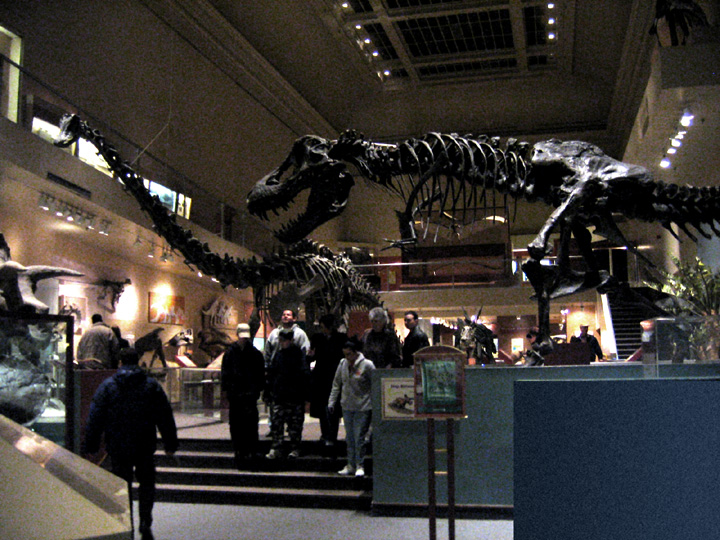
The original Dinosaur Hall at the NMNH at the Smithsonian in Washington D.C.

  Out of all the toys and cartoons and books I engaged in as a child, there are really three major influences that helped cement my early love for Dinosaurs. The first Dinosaur museum I had ever been to was the National Museum of Natural History at the Smithsonian, back when I lived in Northern Virginia in the Washington D.C. suburbs. It was an incredible place that inspired wonder, and only further fueled my love for the natural world. I loved that place and enjoyed going back again and again.


I spent HOOOURS reading through the contents of this thing

The next major influence on my love for Dinosaurs, was actually a CD-ROM I had as a kid. It was called Microsoft Dinosaurs, When we moved to Northern VA, my family got our very first computer, and this was one of two or three CD-ROMs my brothers and I had for entertainment (to this day I'm grateful my parents provided us with ample educational entertainment opportunities growing up).  This Disc was loaded with information. It had tons of great drawings, and focused on all sorts of different areas of dinosaur studies. It is here where I learned about a much wider variety of dinosaurs than most books or movies represented, as well as how they were related to one another. I also learned here that Pterosaurs and Marine Reptiles aren't dinosaurs at all. It was also my first exposure to early Synapsids, and probably to the concept of evolution without even realizing it. As a bonus, the disc included a bunch of really great animated Dinosaur shorts that depicted some cool visuals and ideas, all of which treated the subjects as living animals. Most notable of these for me was Phil Tippett's Prehistoric Beast.

2. WELCOME TO JURASSIC PARK


So I had a lot of Dinosaurs in my life, as a lot of kids do, but before I ever moved to Virginia, and before the two influences outlined above really started to put Dinosaurs into perspective for me, I was first exposed to the original Jurassic Park. It was 1993, and I was only six years old. It was the first PG-13 movie my parents would allow me to go see ('PLEASE MAKE AN EXCEPTION BECAUSE DINOSAURS!!').  Not only that, but I actually got to see it BEFORE it was out long enough to go to the Dollar Theater, which was unheard of at that time!

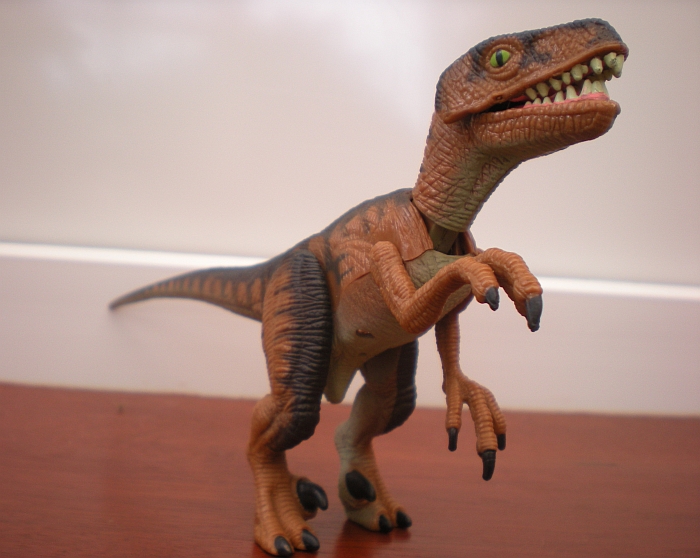
The movie was the first exposure I had that really tried to depict Dinosaurs as realistic living animals. The film talked about their feeding habits, their locomotion, illnesses, intelligence, breeding, social groups, and more. When characters talked about Dinosaurs in the film, they talked about them as if they were just regular animals. The film featured Dinosaurs I had never heard of before, such as Dilophosaurus and Velociraptor. It's where I learned there were different types of Sauropods. And even the toys taught me some things about dinosaurs:

'What's that thing between the raptor's legs? I thought all the Dinosaurs in Jurassic Park were female!' 
.....
'Oh, it's because of the shape of the Pubic bone!'

 I saw the movie three times in the theater, The movie felt like something that could happen, and the expert use of animatronics, puppets, CGI, and good old fashioned suspenseful storytelling made it absolutely thrilling. And on top of that, the marketing loved to state how they used a real live paleontologist as a consultant to make sure things were right! Incredible! Like most of us, my little self was blown away.

We all know how much influence the movie has had on pop culture. It's the Dinosaur movie (For instance, before 1993, Velociraptor was an unknown, and now you can't have Dinosaurs in a film without some sort of Dromaeosaur running around.). After all, it is here where we all felt like we had seen real dinosaurs at last. They did it. They brought them back. Mission Accomplished!

3. COMING TO TERMS


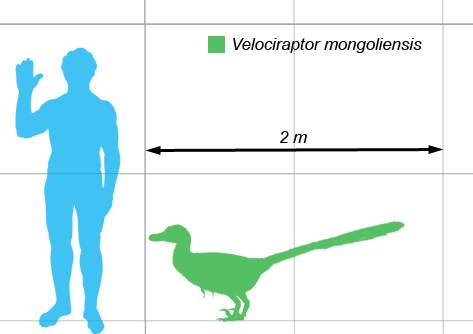
...So imagine my surprise, when I popped in Microsoft Dinosaurs for the first time, and discovered that one of my new favorites, Velociraptor, was actually about the size of a turkey. And it didn't live in what is now Montana, despite what the field work at the beginning of the film would have you believe.

'Looks more like a 6 foot turkey! ....erm...no, just a turkey'


As a kid, I was confused, and felt a bit cheated. Really? That can't be right...can it? After all, they had a real Paleontologist who surely would have told them this was wrong, right?* The important thing is, after a few years of thinking I knew what dinosaurs looked like, I found out it was wrong. And it took some time to come to terms with the truth. It then made me question what else they got wrong in the film. There are plenty of scientific errors in Jurassic Park. I was able to come to terms with a lot of them in different ways- There are bigger Dromaeosaurs out there, so it's just a name- there were still animals much like the Jurassic Park 'Velociraptor' after all. Or - the frill neck and venom of Dilophosaurus is just a clever way of making a statement about how we have limited knowledge of soft tissues and behaviors that don't fossilize. It's a movie, after all. And a really great one with lots of memorable moments. They got a lot right, so I can forgive some things.

*I won't go into the details on the Jurassic Park Velociraptor misnaming and whatnot as it's been covered time and time again on the internet, and there's many differing versions of the story.

Time went on, and we got a sequel in 1997. I enjoyed the The Lost World: Jurassic Park quite a bit as a kid. As far as the animals were portrayed, I knew better about a couple of the inaccuracies of the first movie. I had come to terms with them. And in the new movie, they seemed to get a lot of things right about the animals. The Dinosaur stars once again made me feel like they were treated with respect. They did their research again, and let everyone know they had that famous consultant, so they probably wouldn't make the same mistakes again, right?

'No, you're making all new ones' - Ian Malcolm

 And there was a wider variety of animals! Ones we hadn't seen before, including my childhood favorite, Stegosaurus! And with the new dinosaurs came new ideas to continue the trend of treating dinosaurs like living animals. There's the running theme of parental care (both with Stegosaurus and Tyrannosaurus). There are ideas of conservation, and ecological and population studies. They also introduced the notion that not all dinosaurs were gigantic. (The Compsognathus was a fantastic touch). I felt like they had earned my trust back, even if the resulting movie wasn't as good as the first. Sure they didn't fix those raptors, but they had already established what they were like in the first movie, so I understood that it would take the audience out if they were suddenly tiny, or had a different name.

And then came the third movie.

...ugh....

Jurassic Park III (2001) was the first movie I saw, where afterwards I remember thinking. "Man...that was not a good movie." Especially considering it was one I was anticipating so much. This was the first time a franchise that I adored had let me down, and disappointed me as a fan. Not only was the narrative uninventive and devoid of any proper character or suspense, but I didn't know what to make of the brand new raptors.

The raptors looked very different from what was established in the first two movies. They were different colors, the males had a crest of quill-like proto-feathers, and even the skull shapes were different. Not only that, but they were ridiculously smarter than the raptors in the other two films (they should have met up with the clan from the second film and taught them some things, since those ones were as dumb and slow as (s)nails for the sake of cinematic convenience). The new look threw me off. In this movie, they attempted to update some of their 'science,' which is, admittedly, admirable. After all, the tradition of science and paleoart is to self correct and update with new information (see? That's what their paleo-consultant was there for!)!

'Velociraptor' in Jurassic Park III


 But considering how little they shifted, they might as well have not done it at all. The new raptors were part of the reason why I was taken out of the film (No more half measures guys). And it was unfortunate, considering the actual behavior and animation of the raptors were quite good. They had some real bird-like expressions, movements, and vocalizations. I once again tried to find ways to justify things. Maybe the quills are only on the males, which we haven't seen before this installment? Maybe they're a different species of Dromaeosaur altogether? But then why did Dr. Grant's laughable talking raptor dream, which happened before landing on the island, depict the new raptor design, and not the ones he already knew??

For this film, I couldn't find a way to justify it. At least not like I could with some of the problems of the first two movies. Also gone were the cool biological/environmental science themes from the first movies. But surely this film would have new dinosaurs we hadn't seen before, just like the last one, right? While true, other than the Spinosaurus and the Pteranodon (again, not a dinosaur), exciting new dinosaurs like Ankylosaurus and Corythosaurus were nothing more than mere cameos. At least in the previous movie, we got a little time with individuals like Parasaurolophus and Pachycephalosaurus. 

At this point, I felt done with the franchise. It had gotten itself into a bit of a jumbled mess, and I was ready to move on. And plus, this was the third one, and most sensible stories would gracefully end after a three part trilogy, right? Sure, there was much talk of a fourth installment trying to get off the ground. But then with the passing of both author Michael Crichton and special effects wizard Stan Winston in 2008, many thought it would be best to just let the series respectfully rest in peace.

Oh how little I understood about Hollywood at the time...

4. A BRIEF INTRO TO PALEOART


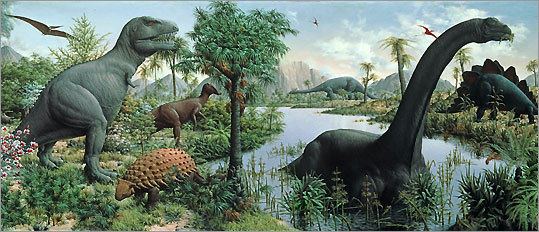
Rudolph F. Zallinger's "The Age of Reptiles" at Yale University 

While I was in grad school, I just wanted to make cool digital animals. I always thought animal anatomy and locomotion was fascinating. And creating, rigging, and animating creatures for films or research purposes is what I wanted to do. When conducting research to find a way to justify my Master's Thesis, and how it fit within the context of Digital Media as a whole, I really discovered what paleoart was all about. I had always liked the old murals I saw in museums, and the reproductions of paintings of prehistoric landscapes that I saw in books. I knew the works of people like Charles R. Knight and Rudolph Zallinger long before I knew their names. What I wasn't familiar with until I started my research, however, was the long history and tradition of paleoart. Plenty of people have written extensively about paleoart, and I won't cover it all here (If you would like to know more, feel free to delve into my thesis paper.). I will touch upon some key themes though. First off, paleoart goes back to the beginnings of paleontology. Paleontology is a very visual science, and much of the time relies on art to translate its ideas to the public in an intuitive way. The other important factor is that the aim of good paleoart is to be as scientifically accurate as possible.

But science is also a self correcting process. Ideas change. New evidence comes about. So how can paleoart ever remain accurate? It can't really. Paleoart has to constantly change and self correct as well. Animals look different in newer works, and some artists (especially now in the digital age) are constantly going back and revising old work to reflect new ideas. What is pretty incredible about this, is that when looking back at a timeline of paleoart through the years, you can easily track scientific ideas over history. A gallery show that chronologically showcases paleoart will double as the history of paleontology itself. 

Paleoart is how many people learn about prehistory. Whether it is accurate or not, it has an impact on what people think the prehistoric world was like. Once you see something, it can be difficult to imagine things another way. You already have a pre-conceived, visual notion in your head. For example, the reason we think of Tyrannosaurus and Triceratops as mortal enemies is largely thanks to this iconic mural by Charles R. Knight: 


5. JURASSIC WORLD

You may be wondering what a 'monster movie' franchise ultimately has to do with traditions in art and science. Whether you like to believe it or not, the dinosaurs of Jurassic Park are part of this paleoart tradition. It became part of this tradition as soon as it boasted that it had accurate dinosaurs thanks to the help of a consulting paleontologist. Every single one of these films has stressed this collaboration. There are behind the scenes featurettes in the promotional materials of every film in the franchise. Even Jurassic World. 

While artwork, books, and museums teach people about long gone animals, films are often a much more immediate way to spread information, whether that's for better or worse. Films reach millions of people in a matter of hours. And that's one reason why, despite its inaccuracies, the science community has often stood behind the original Jurassic Park. It brought mostly up-to-date dinosaur science to the masses, in a convincing, entertaining way like never before. There is no doubt that the original film inspired many of today's up and coming paleontologists to do what they do. But remember, that movie came out 22 years ago. And what did we just learn about science and art? It changes. Sometimes rapidly. 

To be fair, I never wanted there to be a fourth installment. Because of the complicated 'continuity,' the sour taste number-three left in my mouth, and the inconsistent misleading scientific 'accuracy,' I always hoped that another new Dinosaur franchise would rise. This hypothetical new set of films would not be bound to what came before it. It could do its own thing. It could showcase feathery dinosaurs and fuzzy pterosaurs, that are visually appealing and up to date with current scientific ideas. This hypothetical new movie would treat its subjects with respect, and wouldn't be afraid to be both a great entertaining story, while also passively educating people in the way that Jurassic Park did.

(Quick aside -- Unfortunately, the closest thing we got was the visually brilliant, but horrifically produced Walking with Dinosaurs 3D in 2013. While I still think that this film has the best looking dinosaurs to ever be put on film, the result was ultimately a travesty due to studio meddling. The film was intended to be a silent mockumentary, but in fear of not appealing to kids, the studio forced the filmmakers to add voice-over of all the characters. This caused a horribly written constant juvenile narration throughout the entire movie; with hardly any breaks at all. IT. IS. PAINFUL... Even on mute, the story itself isn't particularly engaging, but damn do those Dinosaurs do a good job of reflecting current ideas, and showcasing lots of great animal motions and behaviors. I can even forgive them for a scaly Tyrannosaur, since Yutyrannus wasn't discovered until the movie was already far along in production.)

Walking with Dinosaurs 3D (2013)


Enter Jurassic World. The director, Colin Trevorrow, kicked off production with a tweet that lit the paleontology community on fire: "No feathers. #JP4"

If we've learned nothing else from dinosaur science over the last 22 years, it's that many dinosaurs of various types were full of all sorts of interesting integument - from full flight feathers to strange tail quills. Ultimately, I wasn't surprised by this revelation. I knew that Universal wouldn't want to change up their franchise, and were probably going to rely on nostalgia to get people to see it. But this is what did bug me about the new director's revelation: While I never expected the overgrown 'Velociraptor' or the Tyrannosaurus to suddenly have feathers in the new installment, (they're iconic 'movie monsters,' after all) the comment confirmed that none of the new animals would have them either. This bothered me, because there are some really cool weird animals we haven't seen yet on screen, that we know for a fact had feathers or other interesting integumentary structures. The franchise could potentially continue their science-friendly boasting if they at least showed some good will, by allowing appropriate new dinosaurs to be fuzzy. 

Imagine seeing Microraptor perched in the trees, or some big weird and fluffy Therizinosaurs browsing alongside the Brachiosaurus. This would allow the filmmakers to keep their 'continuity' while also showing they know better. If this movie really had to be made, this approach could allow them to have their cake and eat it too. It is a missed opportunity.

Instead, we live in a world where the Fourth 'Transformers' movie
 contains a more up to date dinosaur than a film called Jurassic World...

While the current take is expected, there is really no reason we can't have fully feathered 'veteran' dinosaurs as well. I can think of a number of reasons why. First of which, is that many of the animals have already looked vastly different in every film. Just look at the following examples:


Jurassic Park 'Velociraptor' throughout the franchise. 
By any form of scientific classification,
 all of these would be considered separate species...
(click to enlarge)


Jurassic Park Pteranodon throughout the franchise. 
You don't have to be a scientist to know that these are all
different designs. You might need to be a scientist to realize the
newest one looks the least like an actual Pterosaur
(click to enlarge)


Jurassic Park Brachiosaurus throughout the franchise. 
I really don't know what they were thinking with this one...
(click to enlarge)

So there's really no reason why they can't change things up. But sure, maybe you could argue that fully feathering something would be a much bigger change than color or shape changes. Don't worry, I have a solution to that as well. 

The new movie apparently focuses a lot more on the genetic engineering angle than the biological/environmental issues of the other movies. This could have easily allowed for a reboot of sort in design. We all know in the original movie, they explain how the scientists used 'frog' DNA to complete the gaps in the dino DNA. If the scientists of Jurassic World were real scientists, they should have realized that it would make more sense to be using Crocodylian or Bird DNA instead. And with this change, they could (like good scientists and paleoartists) be constantly revising their creations; trying to create accurate, more believable results over time. It has been 22 years, after all. Again. Another missed opportunity. 

I have been informed that there is a throwaway line in the film that shows that they know the dinosaurs of Jurassic World are not real dinosaurs, but genetically engineered monsters designed to conform to what tests well with the customers. It does sound like a clever way of jabbing at the studio, but they don't really seem to be doing anything about it either. 

Putting the issue of feathers aside, you would think that the designs of the new animals would at least get more interesting- whether that means more accurate, or at least more visually appealing. None of that is the case with the Pterosaurs in particular. These films love to boast their science cred, as we've seen already, yet they aren't even trying when it comes to the Pterosaurs. What were they even looking at when they approved the Pteranodon designs? And don't even get me started on the Dimorphodon... 

I've never seen such blatant disregard to basic anatomical shapes before. 
Where did they even get that skull shape from?? 
Not to mention the lack of fuzzy pycnofibers or properly shaped feet.

The fact that the Pterosaurs in films are still picking people up with their feet, despite the fact that they did not have a reversed hallux for grasping irritates me (Yes I know they did it in Jurassic Park III too, but you'd hope they wouldn't keep doing the same old trope over and over). I know they want the prehistoric flyers to be menacing, but why not draw upon some up to date Pterosaur research, which would expose the masses to some even more incredible animals. Imagine a 20 ft tall Pterosaur with a 50 ft wingspan picking people off the ground like a stork or heron. It would be terrifying.

The uninspired designs of new animals goes for color patterns as well. The filmmakers have once again been incredibly conservative in this area. While they could keep what they've established, there's no reason they couldn't design some of the new animals to have some striking markings akin to birds, lizards, or even African bovids. For example, there seems to be fan-favorite Apatosaurus in the newest installment of the franchise. And yet instead of making it visually interesting, based on our understanding of how living animals often have striking colors for display or species recognition purposes, we once again get another drab grey sauropod, making these new behemoths look unimaginatively similar to the first film's Brachiosaurus. How about some variety? They're not even the same animal!

It is these reasons why it appears to me, based on what I know, that the film is not paying respect to the science it relies on. There are plenty of opportunities were Jurassic World could have at least made an effort; showed some good will. And all I see is a disregard for the science. 

'But it's just a movie!' I know. Trust me. It essentially looks like a SyFy channel movie with a budget (but I won't comment on that because I haven't seen the film and therefore can't speak to the actual story). I wouldn't write this essay about another The Land Before Time movie. I wouldn't spend this much time trying to critique the anatomical and evolutionary inaccuracies and impossibilities in The Croods. But that is because the intention of those films are clear. They are supposed to be fun movies that grab inspiration from aspects of the real world, but are just kind of doing their own thing. And that is totally fine. I just know that Jurassic World is a part of a franchise which has demonstrably altered the public's perception of the animals it's depicting significantly. And it has the potential to do the same again. Especially when the PR team loves to push the paleontology collaboration. The other Jurassic Park films were aiming to be hard science fiction, where the truth and reality are expertly blurred in classic Michael Crichton style. So when a new movie in the series comes out, that disregards all the sort of research that Crichton would do for his books, it becomes glaringly obvious. I would argue that a film shouldn't try to present itself as a plausible hard science fiction thriller, but not include any actual scientific ideas in it. It brings the storytelling to another level when properly researched. Read pretty much any Michael Crichton book if you don't believe me. 

In all of this, I'm thinking ahead to that kid who, like I was, is introduced to 'modern' dinosaurs through a Jurassic Park film, only to find out his beloved 'raptors' aren't depicted correctly. Only this time, ALL the animals will be 22 years out of date, instead of just a few bits and pieces here and there.

There is no reason why we can't have both a fun entertaining film, as well as accurate animal designs. It can only serve to make it a richer experience. There is no doubt that this new film will inspire people to do some light reading or research on Dinosaurs out of pure curiosity. But what if when they went to Wikipedia, or opened a book, or visited a museum, they realized that the movie they just watched wasn't only accurate, but ahead of those resources? That would be an amazing thing indeed. 

The Lion King (1994)

I like to bring up The Lion King as another great example. This movie is an animated film. It has talking animals and isn't trying to be an accurate portrayal of the social dynamics of a lion pride, by any means. But there are so many subtle references to real animals, and their actual place in the ecosystem. It introduced me to animals I had never heard of before, and caused me to look them up and want to know more. This was not the point of the film. I would never consider The Lion King an educational film. But it had that effect on me because the artists took their time to make it true to the world and setting they were drawing inspiration from. It was what I like to call, 'passively educational.'

I have a dream that we will see that same sort of 'passive education' one day with the prehistoric world. I never expected Jurassic World to be that, as I've already stated. But just know that because of my love and respect for dinosaurs, the fact that I've spent a considerable amount of my adult life studying, contemplating, and learning about paleontology, paleoart, and media, and because of my experiences seeing firsthand how all of that affects culture, that I can not allow myself to contribute to the massive box office that Jurassic World is sure to take in. I know that, particularly today, studios will happily pump out sequels as much as humanly possible. I say humanly possible because we are the ones that allow them to do it. As long as people pay for the films, regardless of how good or bad the movies may be, the film studio will keep the franchise train chugging. Since I never wanted a fourth Jurassic Park film, and definitely don't want a fifth one based on what I know about Jurassic World, I will not pay for it. I've spent too much time caring about this stuff to just give in and support something that doesn't share my values simply for the sake of curiosity. I don't expect you to do the same. I'm sure the film will be entertaining as 'just a movie', and will even be pretty fun times. But I can't be part of the group that sends Hollywood the message this weekend that we want more of the same. 

I've spent many hours working at museums, having to reverse some of the preconceived notions that originated in a 22 year old movie. On the other hand, I've also seen my own art influence young minds, where they were able to quickly comprehend the subtle scientific bits I bothered to put into my work. I even watched as they excitedly ran to their parents to describe information they had just seen ten seconds earlier - which just so happened to be based on actual scientific papers rather than whatever I might have felt like doing at the time. It was a rewarding feeling to think I did right by those kids. And sure, some new data may come along that could make my work inaccurate, but at least I did the best I could with the available resources. 

Kids learning about ancient Crocodiles - Through Art!


So no, there's no reason technically why Jurassic World needs to be an even somewhat educational film. But the sad thing is there's no reason why it can't be. And with how imprinting mass media, particularly blockbuster movies, can be, this whole situation can only be described as a missed opportunity. 

I will continually be looking for that rich, entertaining, thematically moving, and scientifically inspired Dinosaur film that I've always wanted. The film that can be to this generation what the original Jurassic Park was to me and so many others (Will Pixar's upcoming The Good Dinosaur be it? Right now I'm suspecting it won't, but my fingers are crossed). Although based on the disappointments from the last few years, maybe I'll just have to make it myself...

-Evan

P.S. Thanks for staying with me to the end. I warned you it was long! Here's a baby pygmy hippo to reward you for your patience:

d'aawwwwwww